
Banking , Investment, Wealth Management

Switzerland vs Singapore: where HNWI non-residents should bank in 2026

Switzerland vs Singapore: Where Should HNWI Non-Residents Bank in 2026?

When a high-net-worth non-resident asks me where to bank, the choice almost always comes down to two names. Switzerland and Singapore. I work in both. The honest answer surprises people. It is rarely “one or the other.” The Switzerland vs Singapore decision is not a contest with a single winner. It is a question of

Switzerland vs Singapore: Where Should HNWI Non-Residents Bank in 2026? Read More »

Founder choosing a Swiss fintech licence tier — sandbox, FinTech licence or banking licence — to set up a neobank in 2026

How to Set Up a Swiss Fintech or Neobank: The FINMA Licensing Guide for Founders (2026)

Setting up a Swiss fintech or neobank comes down to one question that founders almost always get wrong at the start: which licence do you actually need? Switzerland does not have a single “fintech licence” that covers everything. It has a three-tier ladder — the sandbox, the FinTech licence, and the full banking licence —

How to Set Up a Swiss Fintech or Neobank: The FINMA Licensing Guide for Founders (2026) Read More »

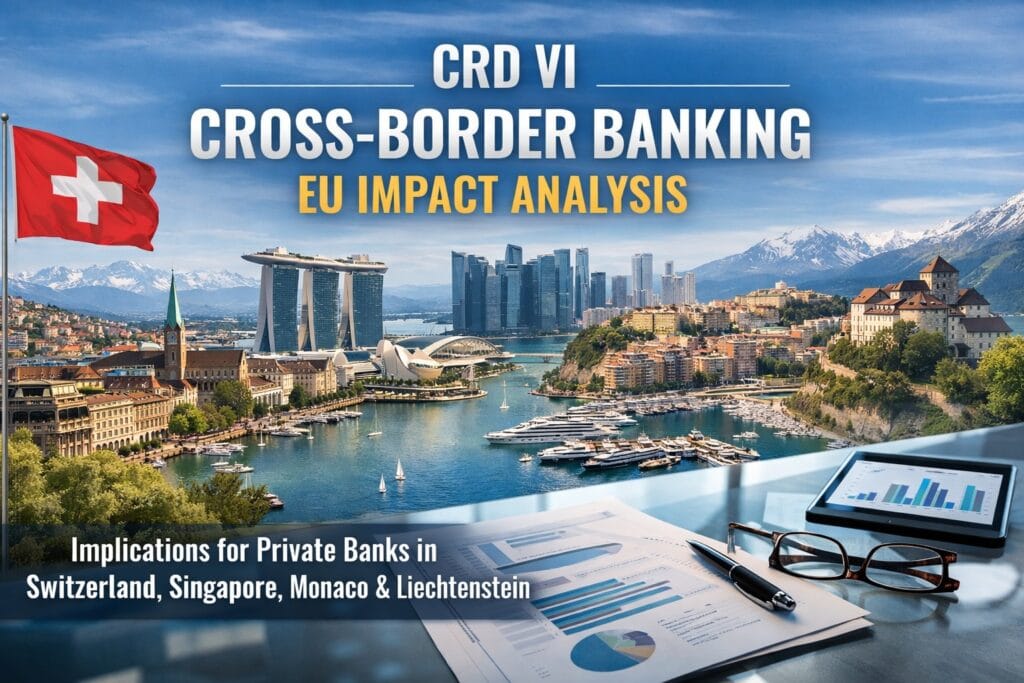
CRD VI cross-border banking EU future impact analysis for private banks in Switzerland, Singapore, Monaco and Liechtenstein showing financial data and global banking hubs

CRD VI and the Future of Cross-Border Banking: The Complete 2027 Strategy Guide for Private Banks

Cross-border banking EU operations are being fundamentally restructured by CRD VI — the EU’s Capital Requirements Directive VI (Directive 2024/1619), a regulatory shift that will redefine the future of cross-border banking. From 11 January 2027, no non-EU bank can actively provide core banking services to clients domiciled inside the European Union without operating through an

CRD VI and the Future of Cross-Border Banking: The Complete 2027 Strategy Guide for Private Banks Read More »

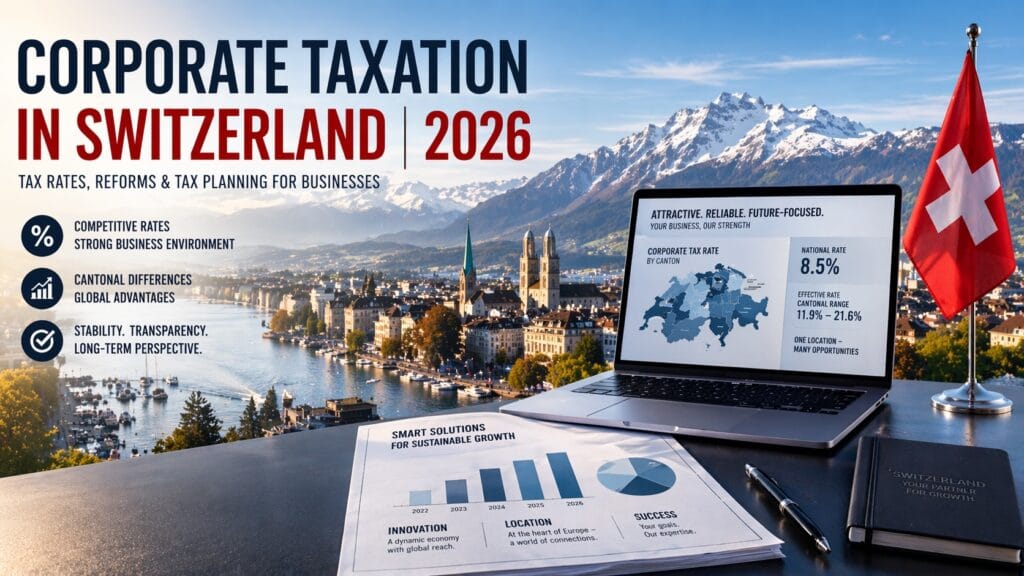
Corporate taxation in Switzerland 2026 showing tax rates, reforms and business tax planning with financial charts, Swiss skyline and corporate workspace

Swiss Corporate Taxation 2026: The Ultimate Strategy Guide

Navigating swiss corporate taxation 2026 requires immediate compliance with the OECD Pillar Two 15% global minimum tax, enforced via Switzerland’s Qualified Domestic Minimum Top-up Tax (QDMTT) and Income Inclusion Rule (IIR). While statutory cantonal rates remain low—Zug at 11.8% and Lucerne at 12.3%—multinationals exceeding €750 million in revenue must pay the difference directly to the

Swiss Corporate Taxation 2026: The Ultimate Strategy Guide Read More »

Chat with us!
Scroll to Top